
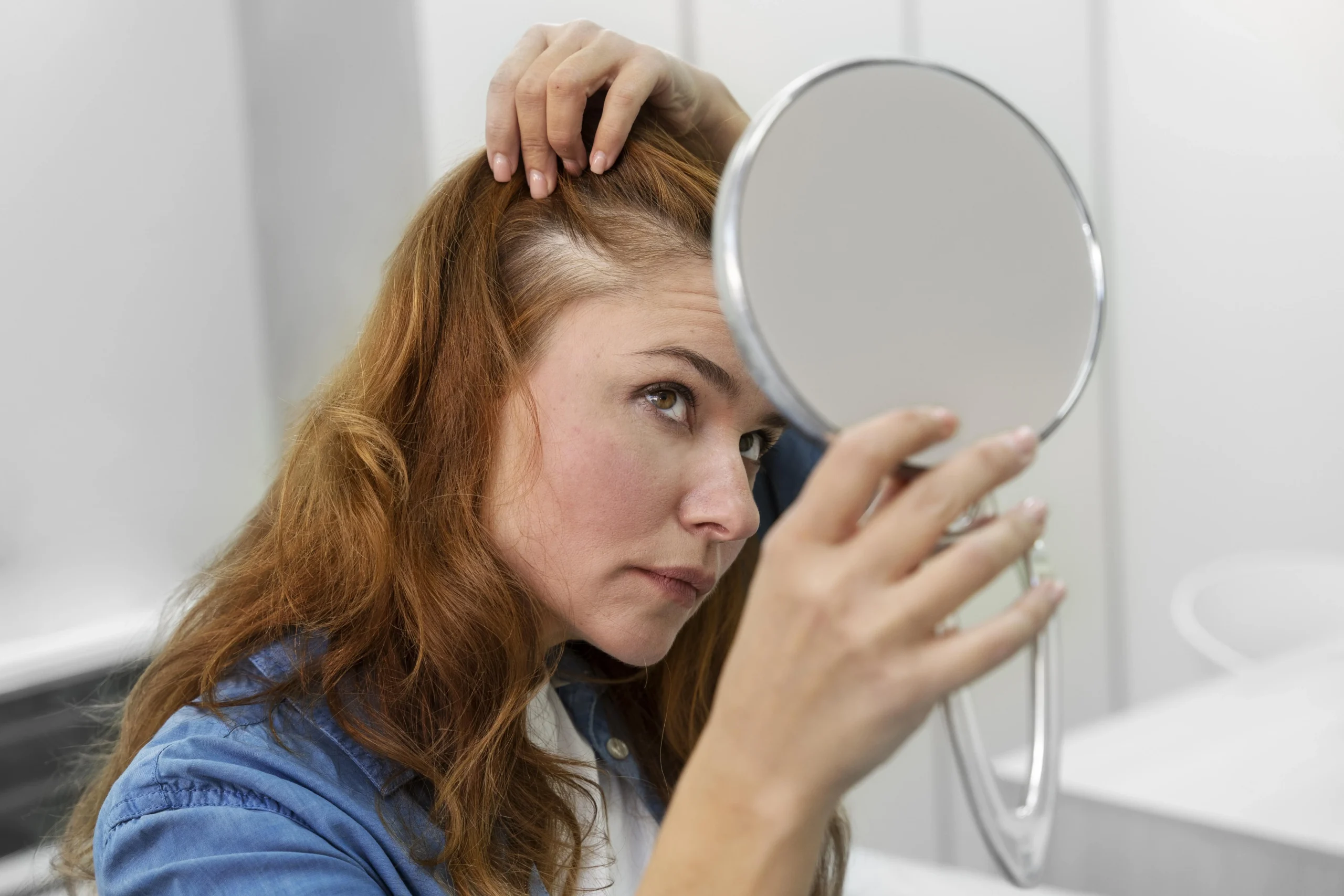
Female pattern hair loss is a common form of chronic thinning that usually presents as diffuse reduction in hair density over the central scalp rather than the classic male receding pattern. Reviews describe female pattern hair loss as involving progressive follicular miniaturization and altered hair-cycle dynamics. That means female hair loss is not always a simple cosmetic issue. It may overlap with genetics, scalp-follicle biology, hormonal shifts, menopause, and sometimes androgen-related factors.

For some women, hair thinning becomes more noticeable during perimenopause or menopause.
In others, it may overlap with androgen-related patterns, family history, or broader hormonal shifts. Reviews note that androgen involvement in female pattern hair loss is less straightforward and less uniform than it is in men, which is why evaluation should be individualized.
That does not mean every woman with thinning hair has an androgen disorder. It means female hair loss should be evaluated thoughtfully rather than treated as a one-size-fits-all problem.
In all honesty, Webtec is the best agency we've ever worked with.
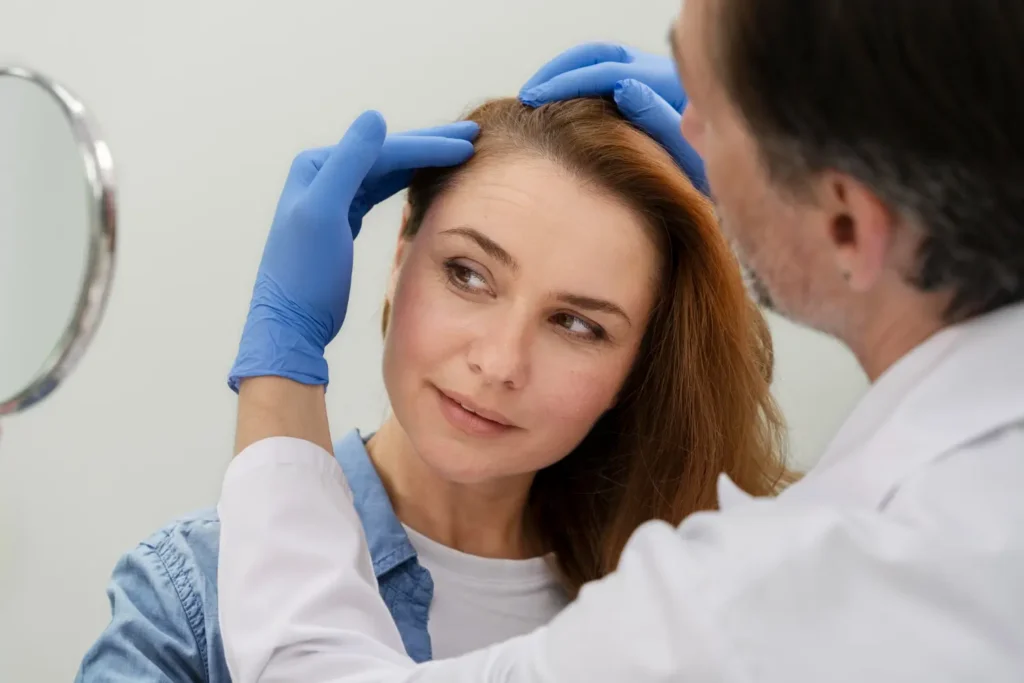
When appropriate, your evaluation may include a review of hair thinning patterns, family and hormone history, current medications, and scalp distribution. We also assess potential hormonal influences, along with overall wellness and nutritional factors, to guide a personalized treatment plan.
Your treatment plan may include a combination of medical therapies, targeted topical solutions, and supportive care tailored to address the underlying causes and promote healthier hair growth over time.
Hair-loss treatment may need to account for:
Because female hair loss can overlap with hormone and aging concerns, our goal is to build a plan that looks at the whole patient rather than only the scalp.
At TruLife Metabolix MD, we aim to provide innovative telemedicine solutions for metabolic weight loss and hormone optimization.
The initial appointment was straightforward and professional. The provider clearly explained the treatment plan and follow-up structure, including monthly text check-ins and video visits every 90 days.
Scott is so knowledgeable and kind! I really enjoyed meeting him! He is extremely well versed regarding ADHD and I deeply appreciate his perspective.
Scott is my new med mgmt provider, absolutely dependable, non-dogmatic, supportive, and leaning in to support me.
I really appreciate my doctor. He truly listens and understands what I’m going through. I finally found the courage to ask for help, and I’m so grateful I did. It feels like a huge weight has been lifted off my chest.
We focus on:
We’ve compiled answers to the most common questions our clients ask to help you get a better understanding of how we can assist you.
In many patients, we prefer oral therapy because it is often easier to stay consistent with and may offer strong efficacy in real-world use. Topical minoxidil still has evidence behind it and remains FDA-approved, but adherence can be harder over time.
Yes. Topical minoxidil is evidence-based and FDA-approved for female pattern hair loss. Its main limitation is that it requires ongoing long-term use, and benefits generally diminish after stopping.
Because low-dose oral minoxidil may improve convenience and adherence, and recent literature supports it as an effective off-label option for patterned hair loss.
Topical minoxidil is the only FDA-approved treatment specifically for female pattern hair loss.
Visible improvement may take several months. FDA labeling indicates some women may need at least 6 months of use before seeing regrowth.
Not necessarily. Reviews note that androgens may contribute in some women, but their role is less clear and less uniform than in male pattern hair loss.
Treat female hair thinning with a plan that accounts for scalp biology, hormones, and long-term support. heading from this


